
How AI Search Engines Like ChatGPT and Perplexity Decide Which Sites to Cite
Key Takeaways
- 1
AI search engines like ChatGPT and Perplexity select citations based on a site's topical authority, content structure, and demonstrable expertise — not just keyword density or backlink count.
- 2
Structuring your content with clear headings, defined terms, and direct answers to specific questions dramatically increases the chance an AI engine surfaces and quotes your page.
- 3
Creators who publish consistent, data-backed content in a focused niche build the kind of topical trust that generative engines reward with repeated citations.
- 4
Optimizing for AI citation is a distinct discipline from traditional SEO — it requires writing for machine comprehension first, human engagement second, without sacrificing either.
The Citation Problem Most Creators Have Never Thought About
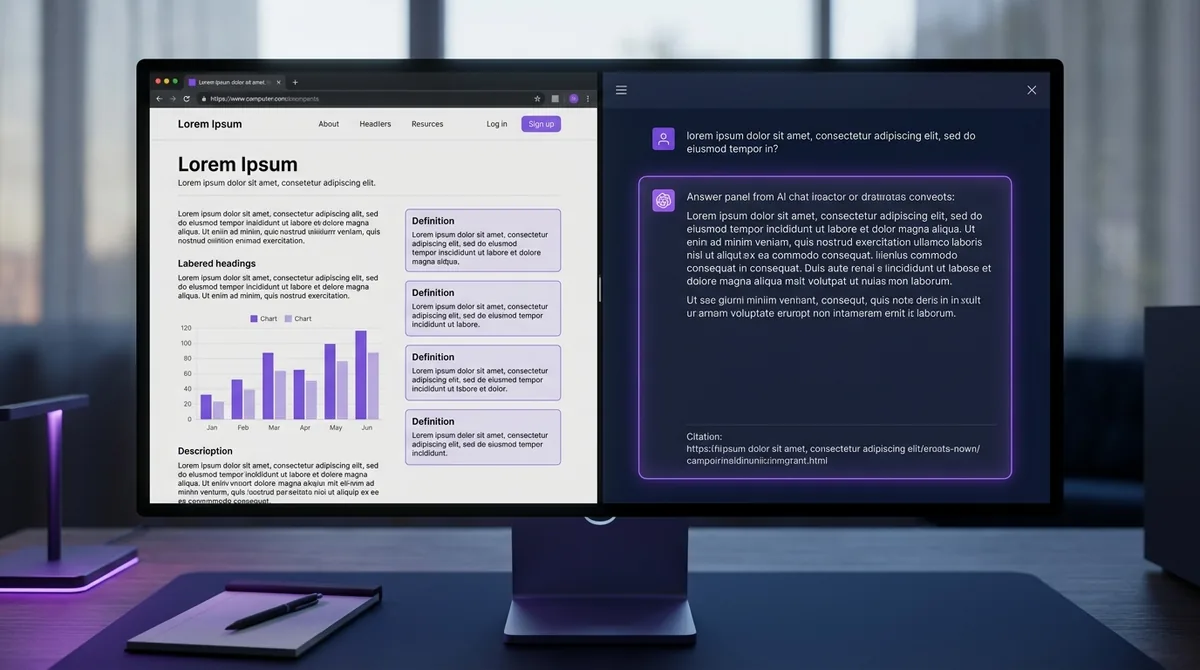
When someone opens ChatGPT or Perplexity and types a question, they do not get ten blue links. They get one synthesized answer — and sometimes, a handful of sources named at the bottom. Getting your content into that short list is the new version of ranking on page one. But the rules are completely different from the ones Google taught us.
This discipline has a name: Generative Search Optimization (GSO) — the practice of structuring content so that AI language models recognize it as credible, citable, and quotable. If you want to understand why it matters for creators and marketers right now, What is Generative Search Optimization (GSO) is the clearest starting point.
This article breaks down the specific signals that ChatGPT, Perplexity, and similar engines evaluate when they decide which sources to name.
Signal 1: Topical Authority Over Time
AI models are trained on large corpora of text. During that training, they develop an implicit sense of which domains consistently produce reliable information on a given subject. When a site publishes fifty well-structured articles about real estate investing, the model begins to associate that domain with real estate expertise. A single viral post does not create the same association.
This is why The Death of the "Viral Hack" is not just a philosophical position — it is a technical reality baked into how these models weight sources. Generative engines are pattern-matching machines. They look for patterns of reliability, and reliability is demonstrated through volume, consistency, and topical focus across many pieces of content.
For YouTube creators, the equivalent concept is topic clustering — grouping your videos around a core subject so the algorithm recognizes your channel as an authority in that space. The same logic applies to written content indexed by AI engines. Topic Clustering and Content Neighborhoods: How to Organize Your YouTube Channel for Algorithmic Authority explains this framework in detail.
Signal 2: Structural Clarity and Machine-Readable Formatting
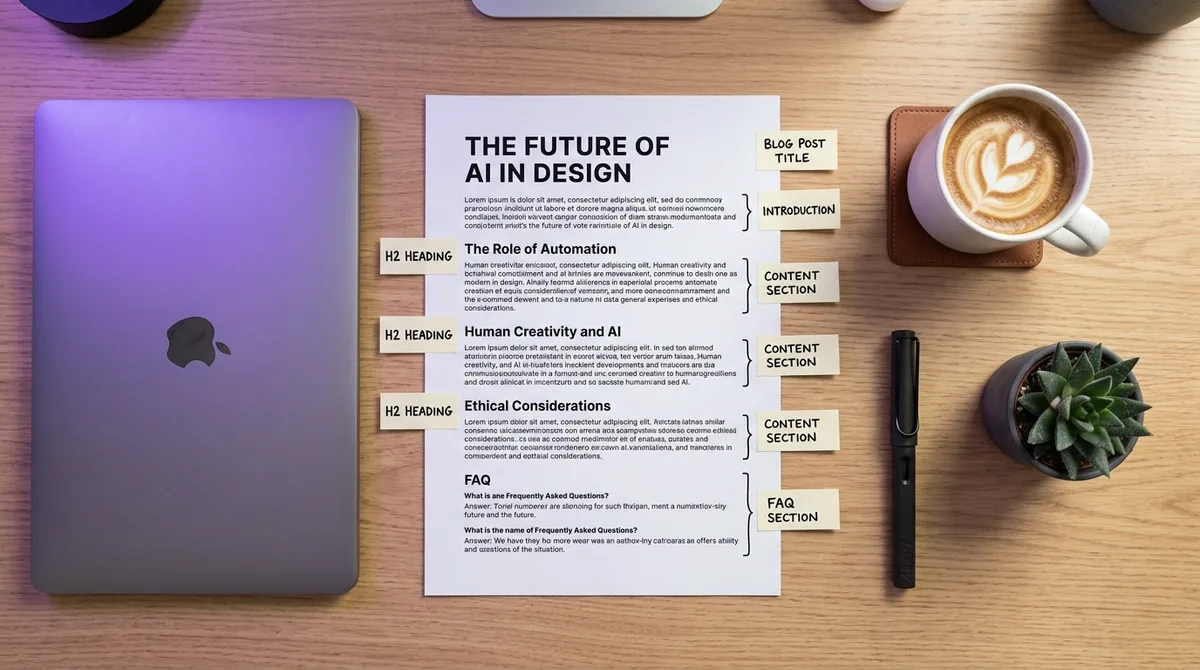
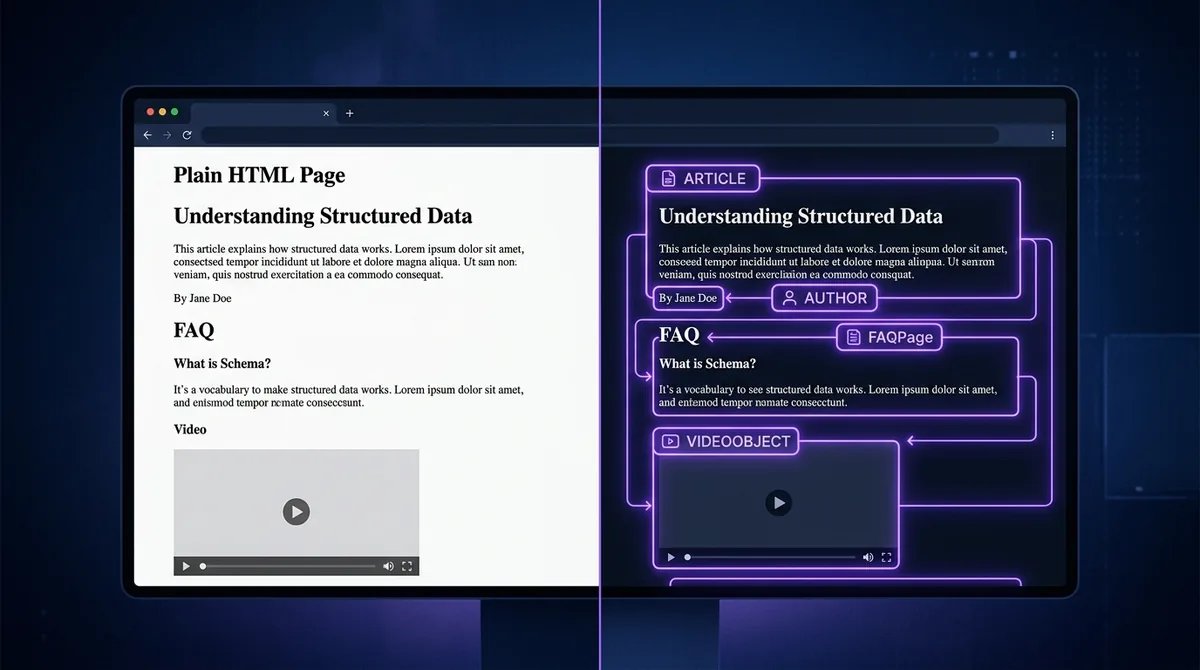
AI engines do not "read" content the way humans do. They parse structure. A page with a clear h1 title, logical h2 subheadings, short declarative paragraphs, and terms defined on first use is far easier for a language model to chunk, summarize, and attribute. A wall of loosely connected prose is not.
Concrete formatting practices that improve AI citability include:
Define technical terms on first use. If you use a phrase like "hook rate" (the percentage of viewers who watch past the first 30 seconds of a video) without defining it, an AI model has less confidence that your content is the authoritative source of that definition. If you define it clearly, you become a candidate to be cited when someone asks what hook rate means.
Use direct question-and-answer structure. Perplexity in particular is optimized to find pages that directly answer the query string a user typed. If a user asks "how does Perplexity decide which sites to cite," a page with an h2 that reads "How Perplexity Evaluates Sources" is far more likely to be surfaced than a page where that answer is buried in paragraph four of a general overview.
Keep paragraphs short and claims specific. Vague, hedged language is harder for a model to extract as a quotable statement. Specific, falsifiable claims — especially ones backed by named data sources — are easier to lift and attribute.
Signal 3: Original Data and First-Party Evidence
One of the strongest citation signals is original research. When your content contains numbers that cannot be found anywhere else — survey results, platform analytics, proprietary benchmarks — an AI engine has no choice but to cite you if it wants to include that specific data point in its answer.
This is why platforms like AskLibra, which aggregate and analyze channel performance data, sit at an advantage in the GSO landscape. Original, first-party data creates citation dependency. No one else has your data.
Content that synthesizes what already exists everywhere is the hardest to get cited. Content that introduces a measurement, a case study, or a benchmark that does not exist elsewhere is cited because it must be cited. If you want a practical framework for building that kind of evidence base over time, What 90 Days of YouTube Data Actually Reveals About Content Performance shows exactly how to extract and present original findings from your own channel history.
Signal 4: Trustworthiness Markers and Explicit Attribution
Generative engines are trained to avoid sourcing content that could embarrass or mislead. They have developed sensitivity to trustworthiness signals, including: author credentials, publication dates, named organizations, and explicit sourcing of claims made within the content itself.
Practically, this means:
Name your sources inside the article. Do not just say "studies show" — say which study, from which institution, in which year. Specificity signals that you verified the claim rather than fabricating it.
Show a consistent publication history. Perplexity's retrieval layer actively indexes sites and evaluates how frequently they publish credible content. A domain that has published one article is treated differently from one that has published consistently for eighteen months.
Avoid clickbait framing. Titles that overpromise and content that underdelivers create a mismatch that retrieval systems can detect — because the content body does not contain what the title implies. The What is YouTube CTR and why does it control your channel's growth? principle applies in reverse here: for AI engines, the "click" is the citation decision, and misleading packaging reduces the chance of earning it.
Signal 5: Engagement Signals and Social Proof (Where Available)
Some generative engines — particularly those with real-time retrieval like Perplexity — incorporate signals about how content performs after it is published. Pages that are shared, discussed, and linked to are treated as more credible than those that exist in isolation.
This is where the feedback loop between YouTube content strategy and written content strategy becomes relevant. A creator who builds genuine audience engagement — meaningful comment threads, shares, replies — generates the social signal surface that reinforces written content authority. The connection between engagement depth and perceived authority is explored in The 'Deep Reply' Weight: How Meaningful Comment Engagement Signals Channel Authority.
The core insight: AI citation is not purely a content production problem. It is also a distribution and community problem. Content that no one engages with is harder to surface, regardless of its structural quality.
What This Means for Your Content Calendar Right Now
Building GSO-ready content requires shifting from a traffic mindset to an authority mindset. You are not writing to rank for a keyword. You are writing to become the source a machine trusts when someone asks a question in your niche.
Three immediate changes you can make:
1. Publish consistently in a single focused topic cluster. Fifty articles on ten topics produce weaker authority signals than fifty articles on two topics. Narrow your content surface and go deeper.
2. Lead every article with a direct answer. State the answer to the implied question in your first two sentences. Then expand. AI retrieval systems favor content where the key takeaway is findable in the first 150 words.
3. Include original data or defined benchmarks in every piece. Even publishing your own channel's analytics — like retention rate benchmarks, average hook rates, posting time performance — creates a citable asset. How to Find Your Best Posting Time on YouTube Using Your Own Data is a practical example of how first-party data transforms a generic topic into a citable resource.
The creators and brands that invest in this kind of structured, evidence-based content now will occupy the citation layer of AI search before their competitors realize the game has changed. Tools that help you extract and present that data — like those outlined in Creator Tools You Cannot Ignore in 2026: The Definitive List (Including AskLibra) — are becoming as essential as a keyword research tool was in 2015.
Frequently Asked Questions
Does having more backlinks help my site get cited by AI engines?
Backlinks are a weaker signal for AI citation than they are for traditional search. Generative engines weight content structure, topical consistency, and original data more heavily than link volume. A highly linked page with vague, unstructured content will often lose to a less-linked page that directly answers a specific question with clear evidence.
How is Perplexity different from ChatGPT in how it selects sources?
Perplexity performs live web retrieval at query time, meaning it actively fetches and indexes pages before formulating its answer — making real-time content freshness and structured formatting especially important. ChatGPT's base model relies on training data with a knowledge cutoff, though its browsing-enabled version also retrieves live pages. Both reward topical authority and structural clarity, but Perplexity is more sensitive to recency.
Can a YouTube channel get cited by AI search engines?
YouTube video transcripts, channel descriptions, and associated written content (like show notes or blog posts linked from a channel) can be indexed and cited. The video itself is not directly readable by most AI retrieval systems, but the text layer around it is. Creating written companion content for your videos significantly increases your GSO surface area.
How long does it take to build enough topical authority to be cited?
There is no fixed timeline, but a consistent publishing cadence of 8-12 well-structured articles per quarter in a focused niche typically begins to build detectable authority signals within six to nine months. Original data and clear definitions accelerate this process because they create citation dependency faster than general overview content. The The 20-30 Video "Data Feedback" Loop framework applies here: volume combined with iteration produces authority faster than perfecting individual pieces.
Does content format matter — for example, long articles versus short ones?
Both formats can be cited, but they serve different query types. Short, highly specific content (300-600 words that answers one precise question) tends to get cited for narrow, factual queries. Longer, structured content (1,500+ words with clear section headers) tends to get cited for broader conceptual questions where the engine needs to synthesize multiple points. Publishing both formats, organized around the same topic cluster, gives you the widest citation surface.
Ready to see what the data says about your channel?
Stop guessing. Use AskLibra to get a personalized 90-day growth gameplan and find your perfect posting window.
No credit card required • Join 2,000+ creators