
Why Your YouTube Hook Rate Is Killing Your Reach
Key Takeaways
- 1
Hook rate — the percentage of viewers who watch past the first 30 seconds of your video — is one of the strongest early signals YouTube uses to decide whether to push your content to new audiences.
- 2
A weak hook rate collapses your entire distribution funnel: even a perfectly optimized thumbnail and title cannot save a video that loses viewers in the first half-minute.
- 3
Based on AskLibra data from 4 connected channels and 511 videos analyzed, longform content averages an engagement rate of 0.0226 — more than double that of Shorts — suggesting that viewers who commit past the hook convert into meaningful engagement far more reliably.
- 4
Fixing your hook is not about gimmicks; it is about matching your opening promise directly to what your target viewer came to learn, feel, or experience.
The 30-Second Verdict
Every time someone clicks on your video, YouTube starts a quiet timer. Within the first 30 seconds, the platform is measuring what is called your hook rate — the percentage of viewers who choose to keep watching past that opening window instead of clicking away. Think of it as the moment a viewer decides whether your video is worth their time. If enough people leave early, YouTube's distribution engine interprets that as a signal that your content does not satisfy the audience it was shown to, and it quietly stops recommending it.
This is not a minor inconvenience. A low hook rate is a distribution ceiling. No amount of keyword stuffing, hashtag stacking, or posting frequency can compensate for an opening that fails to hold attention. If you have ever published a video that performed well in the first hour and then flatlined, a collapsing hook rate is often the culprit.
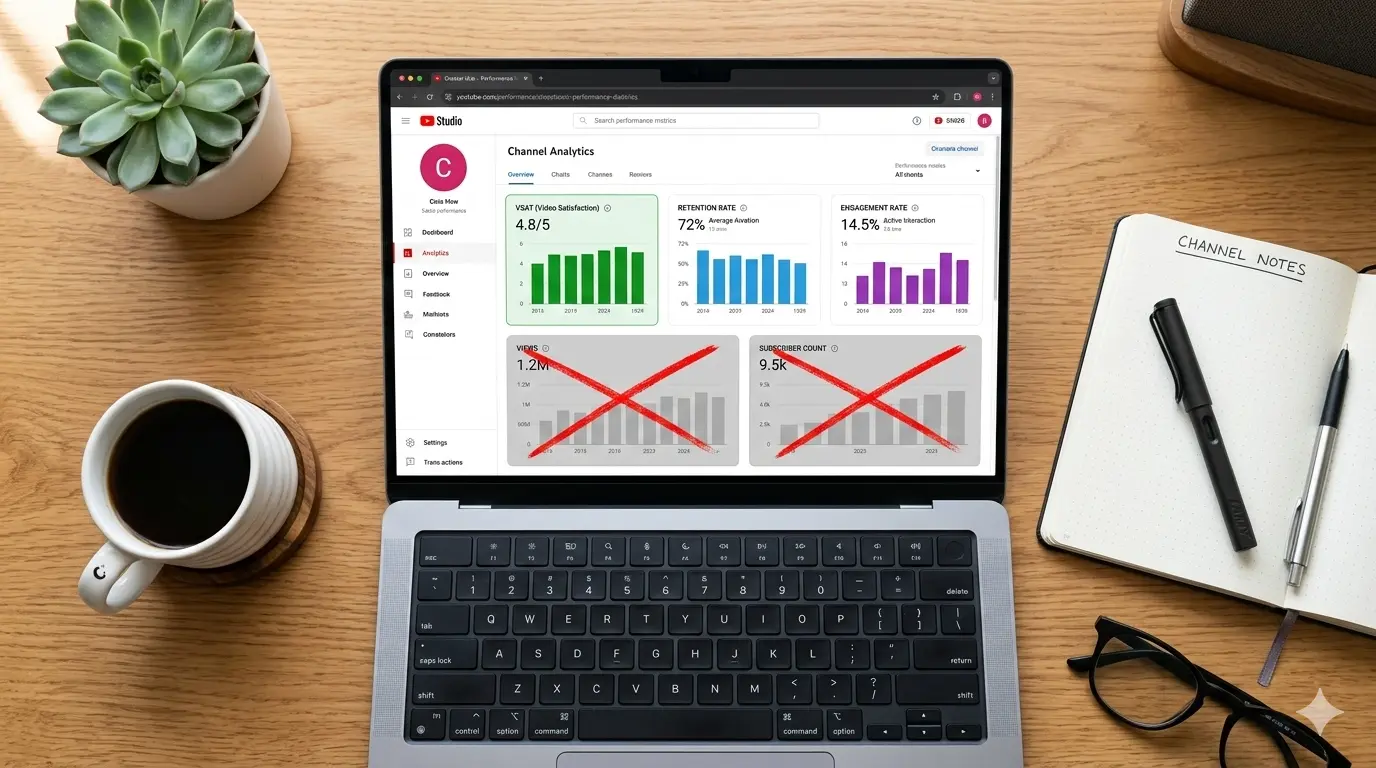
To understand the full picture of how metrics like this drive or stall channel growth, read VSAT: The Only Metric That Matters for YouTube Channel Growth, which explains how viewer satisfaction signals stack together to determine your reach.
What Hook Rate Actually Measures
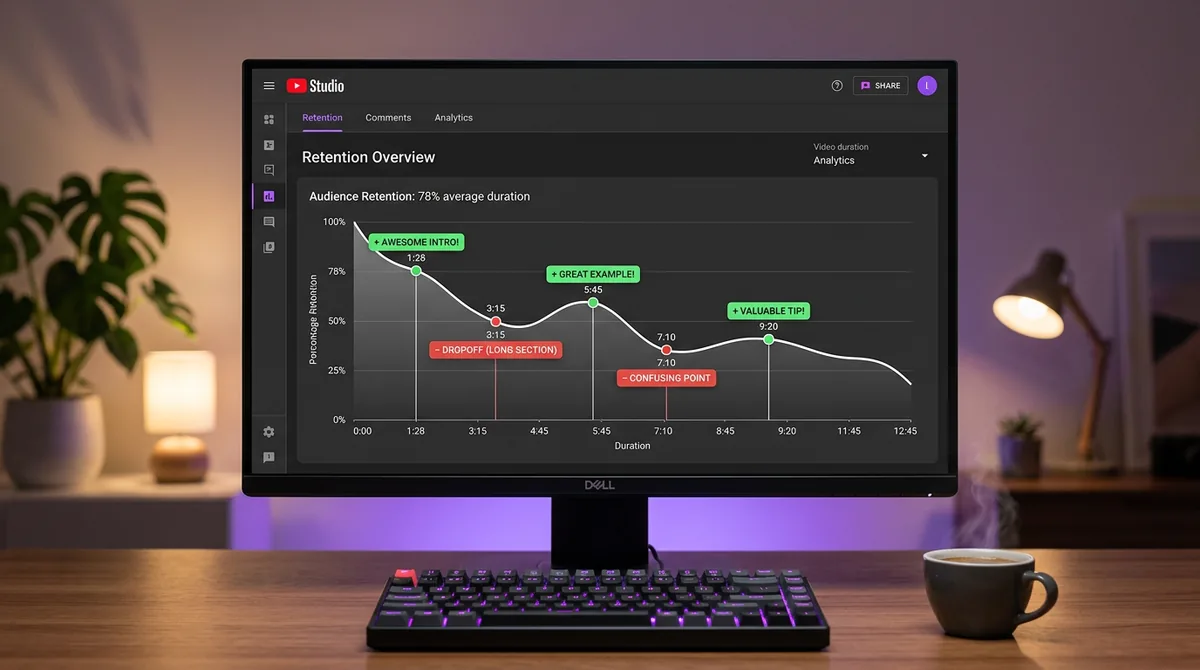
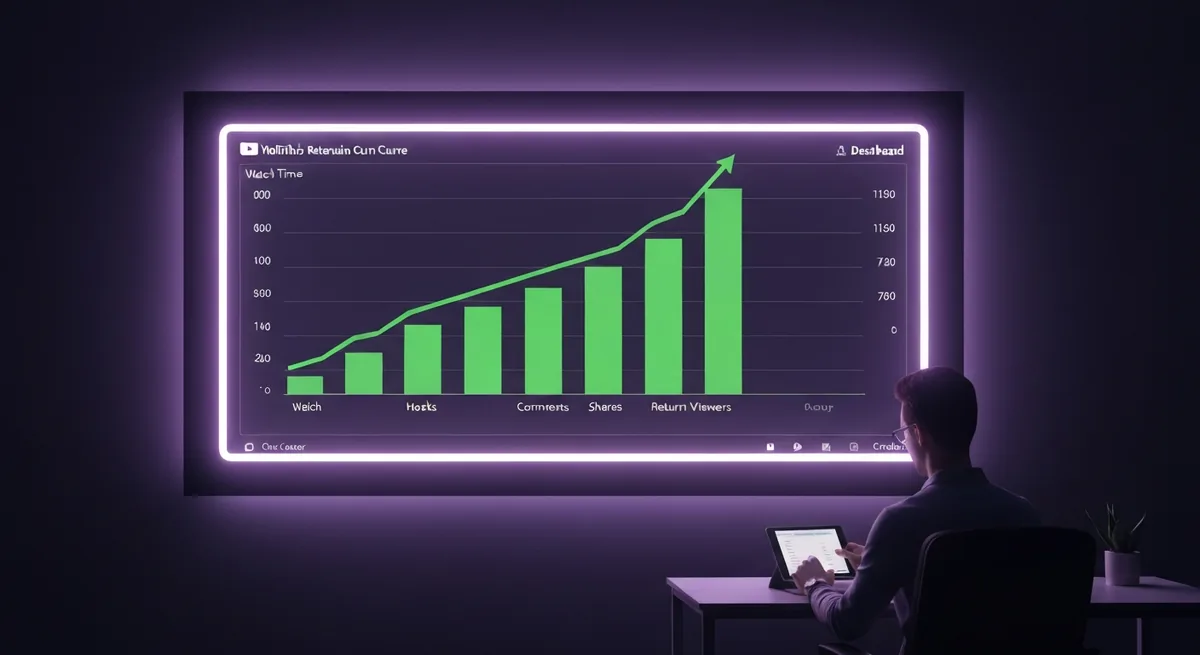
Hook rate is distinct from your overall retention curve — a graph showing the percentage of viewers still watching at each moment of your video. The retention curve tells you the full story of a watch session, while hook rate is specifically the early-drop diagnostic. A video can have a strong retention curve from the 2-minute mark onward but still be throttled by YouTube if the first 30 seconds caused a mass exodus.
CTR (click-through rate) — the percentage of people who see your thumbnail and title and actually click — gets most of the creative attention from creators. But CTR and hook rate operate as a paired system. High CTR with low hook rate is the worst combination possible: you are convincing people to click and then immediately disappointing them. YouTube registers this as a satisfaction failure and reduces future distribution accordingly.
For a deeper breakdown of how to engineer both the click and the watch, see Mastering YouTube: What Will Be a Good Hook Rate in 2026? and Understanding Hook Rates: Boost Your GSO Game in 2026.
The Four Ways Creators Kill Their Own Hook Rate
1. The Long Intro That Earns Nothing
Opening a video with your channel logo animation, a 15-second music bed, and a slow verbal summary of what the video is about is the single most common hook killer. Viewers in 2025 arrive with a specific question or desire. Every second you spend on brand ceremony before delivering value is a second they spend with their thumb hovering over the back button. Your channel name does not need to be announced — it is already visible in the player. Start with the substance.
2. The Broken Promise Between Thumbnail and Opening
Your thumbnail and title set an expectation contract with the viewer. If you promise a dramatic reveal or a specific answer and then spend the first minute on background context the viewer did not ask for, you have broken that contract. This mismatch is one of the leading causes of immediate drop-off. Unlocking the 'Golden Ratio' for YouTube Titles and Thumbnails covers how to align your visual promise with your actual opening delivery.
3. Slow-Build Storytelling Without an Upfront Payoff Tease
Long narrative-style videos can work beautifully, but only if the opening gives viewers a reason to trust the journey is worth it. Documentary filmmakers call this the "cold open" — you show the most compelling moment first, then rewind to explain how you got there. Without this device, a slow-build structure reads as a slow start, and viewers leave before the story gets good. For practical techniques to stop the scroll immediately, see Pattern Interrupt Hooks (2026 Edition): Stop the Scroll and Keep Viewers Watching.
4. Mismatched Audience Targeting
Sometimes the hook itself is fine, but the video is being recommended to the wrong viewers. If your channel has sent mixed signals about its topic — covering five different unrelated subjects — YouTube may be delivering your content to audiences who were interested in one of your topics but not this one. A viewer who clicked on your cooking video and is now watching your finance video has already mentally checked out before your hook even begins. This is why niche consistency matters as much as hook quality. The Micro-Niche Moat Strategy: How to Build an Unbeatable YouTube Channel in a Crowded Space addresses how to signal your identity clearly to both viewers and the algorithm.
What the Data Shows
Based on AskLibra data from 4 connected channels and 511 videos analyzed, longform videos generate an average engagement rate of 0.0226, compared to 0.0109 for Shorts. This gap is significant. It suggests that viewers who survive the hook and commit to watching a longer video are dramatically more likely to like, comment, or share — the downstream engagement signals that expand your reach even further.
The implication is clear: a strong hook on a longform video does not just retain one viewer. It creates a chain reaction of engagement events that YouTube reads as sustained satisfaction, compounding your distribution over time. Shorts, by contrast, have a lower engagement ceiling, likely because the format itself limits the depth of viewer investment that produces those downstream signals.
The average peak posting hour across AskLibra-connected channels is approximately 16:00 (4 PM). Posting at a time when your audience is already active gives your hook its best possible chance — if viewers are in an active browsing session rather than passively scrolling, they are more likely to give your opening the full 30-second consideration it needs.
For a broader look at how posting timing and frequency interact with performance metrics, see Mastering YouTube Success: How Often Should You Post for Maximum Growth?
How to Diagnose Your Hook Rate Problem
Open YouTube Studio and navigate to the Analytics section for any underperforming video. Select the "Audience Retention" tab and look at the shape of your retention curve in the first 30 to 60 seconds. A steep cliff in that opening window confirms a hook problem. A gradual, steady decline across the full video suggests the hook is working but pacing or content depth needs attention — a different problem entirely.
Compare your hook-period drop-off percentage across five or more videos. Look for patterns: Do tutorial videos hold better than opinion videos? Do videos where you state a bold claim in the first five seconds outperform videos where you ask a question? Does showing your face immediately versus using B-roll first correlate with better retention? These patterns, not assumptions, are what should guide your next production decision. The B-Roll Blueprint: Visual Pacing for Retention offers a structured approach to using visuals to maintain attention through the critical early window.
If you want to move beyond manual spreadsheet comparisons, AskLibra vs. Manual Analytics: Accelerate Your Business Growth with the Right Choice breaks down why automated pattern detection surfaces these insights faster and more reliably than reviewing each video individually.
Five Concrete Changes to Improve Your Hook Rate This Week
Open with the conflict or the conclusion, not the context. State what is at stake or what the viewer will know by the end — within the first 10 seconds. Context can come later once they are committed to watching.
Cut your intro music and animation entirely. If your brand identity depends on a logo animation, move it to the 30-second mark or later. Never let branding delay substance.
Use a pattern interrupt in the first five seconds. An unexpected visual cut, a surprising statistic stated aloud, or a direct challenge to a common belief all force the viewer's brain to re-engage rather than drift away.
Rewrite your script's first paragraph last. After you have finished scripting the entire video, return to the opening and rewrite it using only information from the most compelling part of your video. You now know what the payoff is — tease it immediately.
Watch your own hook with the sound off. If the visual alone does not create curiosity in the first 10 seconds, neither will the audio. Strong hooks work on both channels simultaneously.
For more on building viewer trust that supports retention over the long term, Digital Provenance and Trust Labels: The Creator's Guide to Verified Content in 2025 explains how credibility signals in your opening can reduce early viewer skepticism and lower drop-off rates.
Frequently Asked Questions
What is a good hook rate on YouTube?
A hook rate above 70% for the first 30 seconds is generally considered strong, meaning at least 70 out of every 100 viewers who clicked are still watching after half a minute. Anything below 50% indicates a serious opening problem that is likely limiting your reach regardless of video quality. For benchmarks specific to 2026 standards, see Mastering YouTube: What Will Be a Good Hook Rate in 2026?
Does hook rate affect Shorts differently than longform videos?
Yes. Shorts are evaluated on a swipe-away rate rather than a 30-second hook window, since most Shorts are shorter than 60 seconds in total. For longform videos, the 30-second hook rate is a primary early signal. Based on AskLibra data from 511 videos analyzed, longform content produces an average engagement rate of 0.0226 versus 0.0109 for Shorts, suggesting that surviving the hook in a longform video creates significantly more downstream engagement value.
Can a high CTR make up for a low hook rate?
No — in fact, high CTR paired with low hook rate is worse than both being mediocre. It signals to YouTube that your thumbnail and title are misleading, which damages your channel's recommendation score over time. The platform optimizes for viewer satisfaction, not just clicks, so the pair must work together. Aligning your thumbnail promise with your opening delivery is the fastest fix.
How often should I check my hook rate in YouTube Analytics?
Review the retention curve for every video within 48 to 72 hours of publishing, when you have enough data to see a clear early-drop pattern. Then check again at the 7-day mark to see if the hook rate is consistent as the video reaches different audience segments. Patterns across 10 or more videos are more actionable than data from a single upload.
Is a weak hook rate the same thing as being shadowbanned?
No. A shadowban implies deliberate suppression by the platform, which is largely a myth for standard content creators. A low hook rate produces reduced distribution as a natural consequence of viewer behavior signals, not punitive action. The Algorithm Myth: Why You Aren't Being Shadowbanned explains the actual mechanics behind reduced reach and how to address them with data rather than speculation.
Ready to see what the data says about your channel?
Stop guessing. Use AskLibra to get a personalized 90-day growth gameplan and find your perfect posting window.
No credit card required • Join 2,000+ creators